Top Remote Work-From-Home Jobs You Can Apply for Today
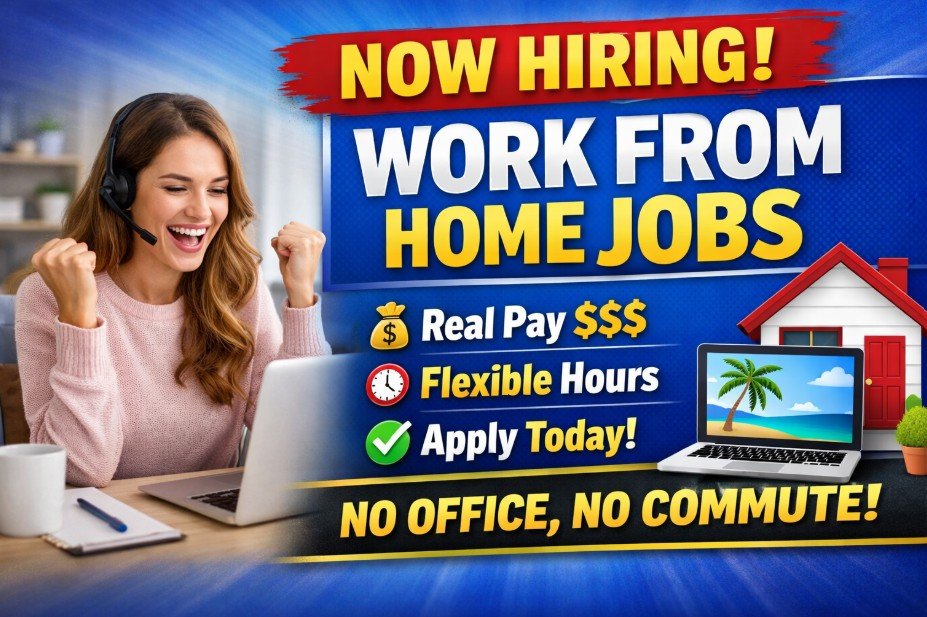
Finding a legitimate work-from-home job can be easier when you know which roles are genuinely available remotely, what skills employers expect, and where to look for trustworthy opportunities. Remote employment now covers far more than traditional customer-service positions. Depending on your experience, you may find opportunities in technology, marketing, administration, sales, education, writing, design, finance, customer support, and many other fields.
The important part is knowing the difference between a real remote job and an attractive-looking advertisement that provides little useful information—or worse, asks applicants for money or sensitive information.
This guide explores some of the top remote work-from-home jobs you can apply for today, including entry-level options, skilled professional positions, freelance opportunities, and jobs that can potentially develop into long-term careers.
Important: Job availability changes constantly. A position mentioned in this article should be treated as a job category to search for rather than a guarantee that a particular employer is hiring today. Always verify the current vacancy, employer, location requirements, compensation, and application instructions before applying.
Table of Contents
- What Are Work-From-Home Jobs?
- Why Remote Jobs Continue to Attract Applicants
- Top Remote Work-From-Home Jobs
- Best Remote Jobs for Beginners
- Best Remote Jobs for Experienced Professionals
- Remote Freelance Opportunities
- Skills Employers Look for in Remote Workers
- How to Find Legitimate Remote Jobs
- How to Apply for Remote Jobs
- Remote Job Scams to Avoid
- How to Improve Your Chances of Getting Hired
- Remote Work-From-Home Job Search Checklist
- Frequently Asked Questions
- Final Thoughts
What Are Work-From-Home Jobs?
A work-from-home job is a position that allows an employee or contractor to perform some or all of their responsibilities outside a traditional office.
Depending on the company, remote work can have different arrangements.
Fully remote
A fully remote position generally allows employees to work away from a company office on an ongoing basis.
However, “remote” does not always mean “work from anywhere.” Some employers restrict applicants to particular countries, states, cities, or time zones because of employment laws, taxes, payroll requirements, or business needs.
Hybrid
Hybrid employees divide their working time between home and an office or another designated workplace.
Remote with occasional travel
Some positions are primarily remote but require employees to attend meetings, conferences, training sessions, or company events occasionally.
Freelance or contract work
Freelancers and independent contractors may work remotely for one or multiple clients. Their arrangements can differ considerably from those of traditional employees.
For this reason, applicants should always read the complete job description rather than assuming that every “remote” listing offers identical flexibility.
Top Remote Work-From-Home Jobs You Can Apply for Today
There isn’t one perfect remote career for everyone. The best choice depends on your skills, experience, education, communication ability, schedule, and income expectations.
Here are several remote job categories worth exploring.
1. Customer Support Representative
Customer support remains one of the most accessible areas for people interested in remote employment.
Remote customer service representatives may communicate with customers through:
- Live chat
- Phone calls
- Help-desk systems
- Social media
- Support tickets
Typical responsibilities include answering questions, troubleshooting basic problems, processing requests, documenting conversations, and escalating complicated issues.
Skills that can help
Employers may look for:
- Clear written communication
- Patience
- Problem-solving
- Basic computer skills
- Good listening ability
- Product knowledge
- Ability to follow procedures
Some companies provide training, making certain customer-support positions suitable for applicants with limited professional experience.
Who should consider this job?
Customer support can be a good starting point for people who enjoy helping others and communicating throughout the day.
2. Virtual Assistant
Virtual assistants provide administrative support remotely.
The exact responsibilities can vary widely. A virtual assistant might help with:
- Scheduling appointments
- Managing email
- Organizing files
- Preparing documents
- Updating spreadsheets
- Researching information
- Coordinating meetings
- Maintaining calendars
- Handling routine administrative tasks
Small businesses, entrepreneurs, agencies, consultants, and online companies may use virtual assistants to handle tasks that don’t require an employee to be physically present.
Useful skills
Strong organization is often more important than advanced technical knowledge.
You can improve your competitiveness by becoming comfortable with:
- Google Workspace
- Microsoft Office
- Calendar applications
- Spreadsheet software
- Video-conferencing platforms
- Project-management tools
Virtual assistance can also become a freelance career if you eventually build a client base.
3. Data Entry Specialist
Data-entry positions involve entering, updating, organizing, or verifying information in digital systems.
Typical tasks might include:
- Entering information into databases
- Updating records
- Checking documents
- Formatting spreadsheets
- Verifying information
- Converting information from one format to another
Because the basic requirements can be relatively straightforward, data entry frequently attracts beginners.
However, applicants should be particularly careful with data-entry advertisements because scammers sometimes use simple remote job descriptions to attract people.
Never assume a job is legitimate simply because the listing says “data entry.” Verify the employer independently before providing personal information.
4. Content Writer
If you enjoy researching subjects and explaining information clearly, remote writing may be worth exploring.
Content writers can create:
- Blog articles
- Website pages
- Product descriptions
- Guides
- Newsletters
- Educational material
- Social media content
- Marketing copy
The most valuable writing skill isn’t simply producing a large number of words. Good writers understand an audience, research information carefully, organize ideas, and make complicated topics understandable.
How to stand out
Create a small portfolio containing several examples of your writing.
You could demonstrate different formats such as:
- A how-to article
- A product comparison
- An educational guide
- A business article
- A short marketing piece
A portfolio gives potential employers something concrete to evaluate.
5. Social Media Manager
Companies increasingly use social platforms to communicate with customers and promote products and services.
A remote social media manager may be responsible for:
- Planning content
- Writing captions
- Scheduling posts
- Monitoring comments
- Tracking engagement
- Researching trends
- Creating content calendars
- Reporting performance
- Coordinating with designers or marketing teams
The role can range from basic content scheduling to strategic marketing management.
Helpful skills
Consider learning:
- Social media analytics
- Copywriting
- Content planning
- Basic graphic design
- Short-form video
- Audience research
- Brand communication
Experience managing a personal project, community, or small business account can sometimes help demonstrate practical ability.
6. Digital Marketing Specialist
Digital marketing offers numerous remote career paths.
Depending on the position, responsibilities can involve:
- Search engine optimization
- Email marketing
- Content marketing
- Paid advertising
- Social media marketing
- Analytics
- Conversion optimization
- Marketing automation
Digital marketing is particularly broad, which means you don’t necessarily need to master every area.
For example, one person may specialize in SEO while another focuses on email campaigns or paid advertising.
A practical approach
Choose one area first, learn the fundamentals, create sample work, and gradually expand your skill set.
7. SEO Specialist
Search engine optimization professionals help websites improve their visibility and usefulness in search engines.
SEO work can include:
- Keyword research
- Content planning
- Technical SEO
- Internal linking
- Competitor research
- Search performance analysis
- On-page optimization
- Website audits
Modern SEO should not be treated as a collection of tricks designed to manipulate search rankings.
Google recommends creating useful, reliable, people-first content and warns against practices intended primarily to manipulate search results.
That makes strong research, content quality, website usability, and analytical thinking increasingly important skills for SEO professionals.
8. Graphic Designer
Graphic design is another field with many remote possibilities.
Designers may create:
- Social media graphics
- Website graphics
- Advertisements
- Presentation designs
- Brand assets
- Marketing materials
- Thumbnails
- Illustrations
- Digital publications
Commonly used design software varies according to the employer and specialty.
A strong portfolio is usually more useful than simply listing design software on a résumé.
Building a portfolio
If you’re new to design, create fictional projects to demonstrate your abilities.
For example, you could create:
- A fictional brand identity
- A social media campaign
- A website landing page
- A product advertisement
- A YouTube thumbnail collection
Clearly label fictional projects as conceptual work.
9. Video Editor
The growth of online video has created opportunities for editors working with businesses, creators, agencies, educators, and other organizations.
Remote video editors may work on:
- YouTube videos
- Short-form videos
- Advertisements
- Educational videos
- Podcasts
- Interviews
- Social media content
Useful skills include:
- Video editing
- Audio cleanup
- Captioning
- Color correction
- Motion graphics
- Storytelling
- File management
A portfolio is particularly important because clients and employers usually want to see examples of the final product.
10. Online Tutor
People with strong knowledge in a particular subject may find remote tutoring opportunities.
Potential subjects include:
- Mathematics
- Science
- Languages
- Computer skills
- Music
- Test preparation
- Academic subjects
- Professional skills
Requirements vary considerably depending on the platform, subject, age group, and location.
Some tutoring roles may require formal teaching qualifications, while others may focus primarily on subject expertise.
11. Online Teacher
Remote teaching can range from traditional school instruction to specialized online education.
Teachers may conduct classes through video platforms and digital learning systems.
Responsibilities can include:
- Preparing lessons
- Teaching students
- Evaluating assignments
- Communicating with parents or students
- Creating educational materials
- Tracking progress
Applicants should carefully check qualification and licensing requirements because these can vary by employer and jurisdiction.
12. Software Developer
Software development is one of the most established remote-friendly professional fields.
Developers may work on:
- Websites
- Mobile applications
- Business software
- Cloud systems
- APIs
- Databases
- Internal tools
Common areas of specialization include:
- Front-end development
- Back-end development
- Full-stack development
- Mobile development
- DevOps
- Cloud engineering
- Software testing
How beginners can enter the field
A formal computer science degree can be valuable, but practical skills and demonstrable projects are also important.
Build several projects and publish appropriate examples in a professional portfolio or code repository.
13. Web Developer
Web development overlaps with software development but focuses specifically on websites and web applications.
A beginner might start with:
- HTML
- CSS
- JavaScript
More advanced developers may work with frameworks, databases, APIs, servers, and cloud infrastructure.
Portfolio idea
Create three different projects:
- A business website
- An interactive web application
- A responsive landing page
Explain what you built and which technologies you used.
14. Bookkeeper
Bookkeeping involves maintaining financial records and organizing transaction information.
Remote bookkeeping responsibilities may include:
- Recording transactions
- Reconciling accounts
- Preparing financial records
- Managing invoices
- Tracking expenses
- Assisting with reporting
Because financial information is sensitive, employers may prioritize accuracy, reliability, confidentiality, and familiarity with accounting software.
Applicants should understand the difference between bookkeeping and regulated professional accounting services, especially when working across different jurisdictions.
15. Sales Representative
Remote sales positions can involve selling products or services through:
- Phone calls
- Video meetings
- Online demonstrations
- Customer relationship management systems
Some roles focus on finding potential customers, while others focus on managing existing accounts.
Important skills include:
- Communication
- Listening
- Negotiation
- Product knowledge
- Organization
- Follow-up
- Customer relationship management
Before accepting a remote sales position, carefully review how compensation works, including salary, commission, quotas, and any performance conditions.
16. Project Coordinator
Project coordinators help teams keep work organized.
Responsibilities can include:
- Tracking deadlines
- Scheduling meetings
- Updating project documentation
- Communicating with team members
- Maintaining task lists
- Preparing reports
- Following up on outstanding work
This role can be a useful option for people with strong organizational and communication skills.
Experience with project-management software can strengthen an application.
17. Recruiting Coordinator or Recruiter
Recruiting teams often perform many activities remotely.
A recruiting professional may:
- Screen applications
- Schedule interviews
- Communicate with candidates
- Maintain applicant records
- Coordinate hiring processes
- Support recruitment campaigns
Experienced recruiters may also source candidates and conduct interviews.
Strong communication and organization are particularly valuable in this field.
18. Customer Success Specialist
Customer success roles focus on helping customers achieve useful outcomes after purchasing a product or service.
Responsibilities may include:
- Onboarding customers
- Answering product questions
- Monitoring customer accounts
- Providing training
- Identifying problems
- Coordinating with internal teams
This can be an attractive career path for people who enjoy both communication and problem-solving.
Best Remote Jobs for Beginners
If you have little professional experience, don’t assume you need to immediately compete for highly specialized positions.
Consider starting with roles where transferable skills matter.
Potential entry-level categories
- Customer support
- Virtual assistance
- Data entry
- Administrative support
- Sales development
- Content moderation
- Basic content writing
- Online tutoring
- Transcription
- Junior marketing support
Availability and qualification requirements vary from one employer to another.
The goal should be to find a legitimate opportunity where you can develop experience rather than simply choosing a job because it promises easy money.
Best Remote Jobs for Experienced Professionals
Professionals with established skills may have access to a wider range of remote opportunities.
Potential areas include:
- Software engineering
- Data analysis
- Cybersecurity
- Product management
- UX/UI design
- Digital marketing
- Financial analysis
- Accounting
- Consulting
- Project management
- Technical writing
- Sales management
- Customer success management
Experienced candidates should emphasize measurable accomplishments rather than simply listing responsibilities.
For example, instead of saying:
“Managed social media accounts.”
A stronger résumé statement might explain the project, responsibilities, and measurable outcome where the figure is accurate and verifiable.
Remote Freelance Jobs You Can Explore
Remote work isn’t limited to traditional employment.
Freelancing allows professionals to provide services to clients on a project or contract basis.
Popular freelance categories include:
Writing
- Blog writing
- Copywriting
- Technical writing
- Editing
- Proofreading
Design
- Logo design
- Presentation design
- Social media graphics
- UI design
Technology
- Website development
- Software development
- Automation
- Technical support
Marketing
- SEO
- Social media management
- Email marketing
- Advertising
Administrative services
- Virtual assistance
- Research
- Data organization
- Calendar management
Freelancing provides flexibility, but it also comes with responsibilities such as finding clients, agreeing on scope, managing deadlines, tracking payments, and understanding applicable tax requirements.
Skills Employers Look for in Remote Workers
Remote employees need more than technical skills.
Because coworkers may not share the same physical office, employers often value people who can work independently and communicate effectively.
1. Communication
You should be able to explain:
- What you are working on
- What has been completed
- What is delayed
- What information you need
- What problems require attention
Clear communication reduces unnecessary back-and-forth.
2. Time Management
Remote workers often have greater independence.
That means you need to manage deadlines without someone constantly checking your progress.
Simple habits can help:
- Maintain a daily task list
- Break large projects into smaller tasks
- Set personal deadlines
- Track recurring responsibilities
- Review priorities regularly
3. Digital Literacy
Most remote jobs require comfort with everyday technology.
Depending on the position, you may use:
- Video conferencing
- Cloud storage
- Spreadsheets
- Chat applications
- Project-management software
- Company-specific systems
4. Problem-Solving
Remote employees cannot always walk over to a colleague’s desk for immediate help.
Employers therefore value people who can investigate problems, identify possible solutions, and communicate when assistance is actually required.
5. Reliability
Meeting deadlines and responding within reasonable working expectations are important in remote environments.
Being remote does not mean being unavailable.
How to Find Legitimate Remote Jobs
One of the biggest challenges isn’t finding remote job advertisements—it’s determining which opportunities deserve your attention.
Start with reputable sources.
Search company career pages
If you discover a position through another website, consider checking whether the same vacancy appears on the employer’s official careers page.
This provides another way to verify that the position exists.
Research the company
Look for:
- Official website
- Company contact information
- Established online presence
- Employee information
- Consistent job descriptions
- Verifiable business activity
Be cautious if a supposed employer has almost no independent presence.
Read the entire job description
Don’t apply solely because the headline says:
“Work From Home — Earn Huge Income!”
Look for specific information about:
- Responsibilities
- Required skills
- Employment type
- Location restrictions
- Working hours
- Application process
- Compensation structure
How to Apply for Remote Jobs
A strong remote application should make it easy for an employer to understand what you can contribute.
Step 1: Update your résumé
Keep your résumé focused on relevant experience.
Highlight:
- Skills
- Accomplishments
- Relevant projects
- Tools you know
- Previous remote experience
- Communication abilities
Avoid adding every skill you’ve ever encountered.
Step 2: Customize your application
Sending the same generic résumé to dozens of employers may be convenient, but tailoring your application to the role can make it more relevant.
If the employer specifically asks for experience with a particular tool, project type, or responsibility, make relevant experience easy to find.
Step 3: Create a portfolio
A portfolio can be particularly valuable for:
- Writers
- Designers
- Developers
- Video editors
- Marketers
- Photographers
- Social media professionals
Your portfolio should demonstrate actual ability rather than simply making claims about your skills.
Step 4: Prepare for video interviews
Remote hiring commonly involves online communication.
Before an interview:
- Test your microphone
- Check your camera
- Confirm your internet connection
- Choose a quiet location
- Keep your résumé accessible
- Research the company
- Prepare questions
You don’t need an expensive home studio. A clear, professional setup is generally more important than elaborate equipment.
Remote Job Scams to Avoid
Work-from-home scams can be convincing, especially when they promise easy income and flexible schedules.
Watch for warning signs.
Be cautious if someone asks you to pay to get hired
A legitimate employer should not need you to purchase a mysterious “starter package” simply to receive a job offer.
Be particularly careful with requests for:
- Registration fees
- Training fees
- Security deposits
- Equipment payments sent to individuals
- Cryptocurrency payments
- Gift cards
Be suspicious of guaranteed earnings
Statements such as:
“Earn $10,000 every month with no experience!”
should immediately make you investigate further.
Income depends on the employer, role, experience, location, hours, compensation model, and many other factors.
Watch for requests for sensitive information
Don’t casually provide sensitive personal or financial information to an unknown person simply because they claim to be a recruiter.
Verify the company and hiring process first.
Beware of fake checks and equipment schemes
One common type of fraud involves sending a check and asking the applicant to use part of the money to purchase equipment or send money elsewhere.
Don’t assume deposited funds are legitimate simply because they temporarily appear in your account.
If something about the payment process doesn’t make sense, stop and independently verify the employer.
How to Improve Your Chances of Getting Hired for Remote Work
Remote jobs can attract applicants from many locations, so competition can be strong.
Here are practical ways to improve your application.
Build job-specific skills
Don’t try to learn everything.
Choose the career area you’re targeting and identify the most important skills for that field.
For example:
Customer support: communication + CRM software + problem-solving
Content writing: research + writing + editing + SEO fundamentals
Graphic design: design fundamentals + portfolio + design software
Web development: programming fundamentals + projects + version control
Build proof of your abilities
Saying “I am good at writing” is less convincing than showing three strong writing samples.
Saying “I can edit videos” is less persuasive than presenting a polished portfolio.
Whenever possible, show your work.
Apply consistently
Job hunting can take time.
Create a manageable routine:
- Search for relevant vacancies
- Review requirements
- Customize applications
- Track submissions
- Follow up appropriately
- Improve your résumé based on feedback
Quality matters more than blindly submitting hundreds of applications.
Remote Work-From-Home Job Search Checklist
Before applying, ask yourself:
Job legitimacy
- Is the company identifiable?
- Can I verify the employer?
- Does the job exist on an official company website?
- Is the application process reasonable?
- Am I being asked for money?
Job suitability
- Do I meet the essential requirements?
- Can I perform the work remotely?
- Does the time zone work for me?
- Are the working hours suitable?
- Is the employment type clear?
Application quality
- Is my résumé current?
- Is my relevant experience easy to find?
- Do I have portfolio samples if appropriate?
- Have I customized my application?
- Have I checked for spelling and formatting errors?
Frequently Asked Questions
What is the easiest work-from-home job to get?
There isn’t one universally easiest remote job. Customer support, virtual assistance, administrative work, data entry, and certain entry-level sales or service positions may be accessible to people with limited experience, but requirements and competition vary by employer.
Can I get a remote job with no experience?
Yes, some remote positions are designed for entry-level applicants or provide training. However, you should still demonstrate transferable skills such as communication, organization, computer literacy, reliability, or customer service.
Are remote jobs available internationally?
Some companies hire internationally, while others restrict remote positions to particular countries or regions. Always check the location requirements in the job advertisement.
Do remote jobs require a degree?
Not necessarily. Requirements depend on the role. Some professions have formal education or licensing expectations, while others place greater emphasis on skills, experience, portfolios, certifications, or demonstrated ability.
Can remote work be a full-time career?
Yes. Remote employment can include full-time, part-time, contract, freelance, and other arrangements. The exact structure depends on the employer and position.
How can I tell if a work-from-home job is legitimate?
Research the company, verify the vacancy through an official source when possible, carefully read the job description, and be suspicious of requests for upfront payments or unusually large guaranteed earnings.
Does applying to more jobs guarantee employment?
No. Job applications are competitive, and there is no guaranteed number of applications that will result in an offer.
A better strategy is to target suitable positions and continuously improve your résumé, portfolio, interview skills, and relevant qualifications.
Final Thoughts
Remote work has developed into a broad employment category rather than a single type of job. Whether you’re starting your career, looking for additional flexibility, changing industries, or trying to move an existing profession online, there are numerous work-from-home paths worth exploring.
The most important step is to match your skills with a genuine business need.
Customer service professionals can explore remote support roles. Organized individuals may consider virtual assistance or project coordination. Writers and designers can build portfolios and pursue creative opportunities. Technology professionals can investigate development, data, cybersecurity, or cloud-related careers. Teachers and subject-matter experts may explore online education.
At the same time, don’t let the promise of flexible work make you ignore basic job-search safety. Verify employers, read job descriptions carefully, research compensation, and avoid opportunities that require suspicious upfront payments or make unrealistic promises.
A successful remote career usually isn’t built around finding a magical “easy work-from-home job.” It’s built by developing useful skills, demonstrating those skills, applying strategically, and finding an employer or client whose expectations match your abilities.
Related News

Work From Home Jobs That Actually Pay in 2026 (Apply Today)

Freelance & Contract Jobs Hiring Immediately – Flexible Work, Fast Payments

No Experience? Top Part-Time Jobs You Can Start This Week

Part-Time Jobs Near Me & Online – Apply Today

Freelance & Contract Jobs Hiring Now – High-Paying Remote Gigs You Can Start Today