Iran Downplays Direct Talks With US as Gulf Leaders Meet Trump on War Strategy
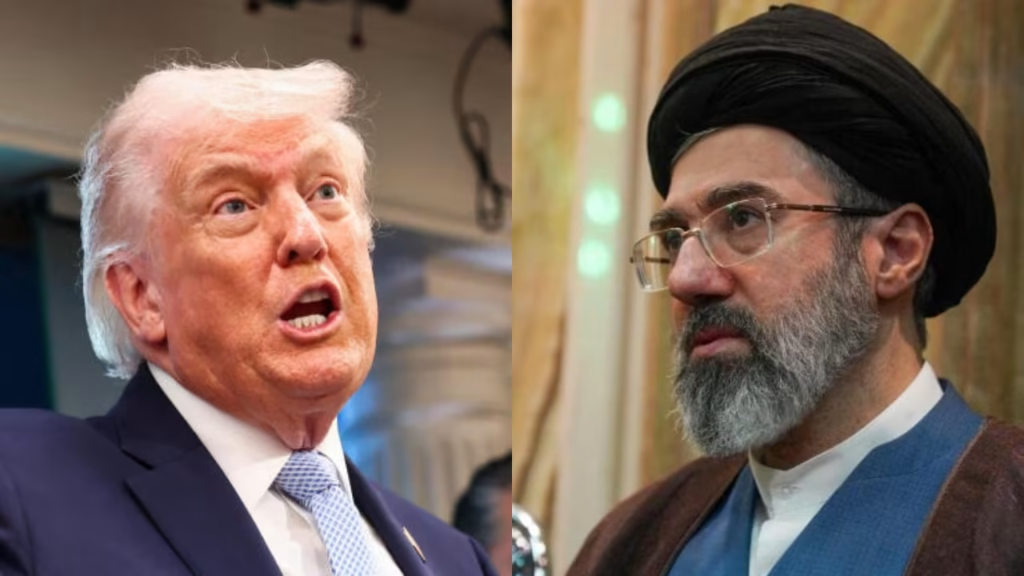
Iran stated on Sunday that no direct negotiations have taken place with the United States, characterizing recent contacts as limited to message exchanges through intermediaries. The comments came as President Donald Trump prepared to meet Gulf leaders in New York to discuss the next phase of the Iran war.
Iranian Foreign Ministry spokesman Esmaeil Baghaei said messages were conveyed through third parties, including Pakistan, reflecting what he described as Washington’s desire to negotiate. ‘Until now, we have not held any direct negotiations with the US,’ Baghaei said. ‘What has been exchanged are only messages we received through intermediaries, showing America’s desire to negotiate.’
Baghaei also questioned the reliability of US diplomatic overtures. ‘I do not know how many people in America actually take the country’s diplomatic statements seriously,’ he said. ‘Our task is very clear, unlike the other side, which constantly changes its position.’
The spokesman described proposals received from Washington as ‘excessive and unrealistic.’
Gulf Leaders Meet Trump
Trump is scheduled to meet with leaders and foreign ministers from the six Gulf Cooperation Council countries on Tuesday on the sidelines of the UN General Assembly. The meeting will focus on US ideas for a postwar strategy, according to Axios.
The State Department sent initial invitations on Wednesday. The six GCC nations are Saudi Arabia, the United Arab Emirates, Qatar, Bahrain, Kuwait, and Oman.
Trump told Axios last week that he faced a ‘big decision’ on the war and wanted to hear directly from Gulf leaders. Their challenge is to offer him a path that protects their interests without drawing them deeper into the conflict.
A coordinated appeal by Gulf leaders in early August helped persuade Trump to call off a major attack on Iran, according to CNN. At the time, Saudi Arabia, the UAE, and Qatar believed a deal with Tehran was within reach.
More than a month later, no such deal has emerged. Oil prices remain high, and the US midterm elections are approaching.
Iran-Oman Maritime Understanding
Separately, Baghaei announced that Iran-Oman negotiations on designating a temporary route for safe passage through the Strait of Hormuz have reached their final stage. The understanding would likely be registered with the International Maritime Organization in the coming days.
The Strait of Hormuz has been a recurring flashpoint. Iran’s enforcement of its claims over the waterway has led to repeated flare-ups, including US Central Command strikes on Iranian military targets in June.
IRGC Rejects Backchannel Claims
In August, the Islamic Revolution Guard Corps rejected Trump’s claim of a backchannel for talks. IRGC spokesperson Hossein Mohebbi called the claim a ‘delusion’ and said even Iran’s diplomatic apparatus was not negotiating with Washington due to what he described as US breaches of promises.
Baghaei also denied media reports of unofficial contact between Washington and the IRGC, calling the news ‘media techniques and psychological operations used to sow discord among Iran’s decision-making bodies.’
Nuclear Talks History
Indirect talks between the two sides have been held in multiple venues this year. In February, officials met in Oman. Iranian Foreign Minister Abbas Araghchi said at the time that a nuclear agreement was possible if the US negotiated on the basis of mutual respect.
In June, the US and Iran agreed to a memorandum of understanding brokered by Qatar and Pakistan. The 14-point deal included a 60-day ceasefire and the reopening of the Strait of Hormuz. It also set a timeline for talks to permanently end the war and address Iran’s nuclear program.
Around of indirect talks concluded in Doha in July, with mediators reporting ‘positive progress.’ Iran’s Deputy Foreign Minister Kazem Gharibabadi said an agreement was reached to establish a communications channel to report alleged violations of the memorandum.
Trump told reporters at the time that ‘the denuclearisation of Iran is moving along well.’
The next round of indirect talks was set to occur after the funeral processions for late Supreme Leader Ayatollah Ali Khamenei, who was killed on February 28. His son Mojtaba assumed power.
Regional Tensions Persist
Iranian Army Commander Kiumars Heidari said on Sunday that large-scale forces remain deployed along the country’s northwestern, western, southwestern, eastern, northeastern, and southeastern borders, as well as coastal areas, to respond to potential threats.
Iran’s Khatam al-Anbiya Central Headquarters said intelligence indicated the US had decided to take hostile action against Iran after a joint meeting in a European country. The US has not officially responded to that claim.
Trump told a Fox News reporter on Sunday that the US was in a ‘decision-making stage’ regarding Iran and that ‘something very major’ would happen ‘soon.’
Meanwhile, Qatari Foreign Ministry spokesperson Majed Al-Ansari said Qatar is communicating with both the US and Iran to push for a resumption of negotiations. He said multiple US officials confirmed Washington wants to reach an agreement and end the conflict. No timeline for talks was given.
nn
Image Via: Deccanherald
Related News

Hilary Duff Extends The Lucky Me Tour With Pittsburgh Arena Show Set for October 2027

Netflix Stock Falls in September as Analysts Point to YouTube Competition and Weak Engagement

Morgan Stanley Report Projects Hyperscaler AI Spending to Surpass $2 Trillion as Free Cash Flow Declines
Jimmy Kimmel Criticizes Trump Press Ban With Remark on Melania Trump’s Separate Bedroom

IonQ Shares Surge on Nvidia Superion 256 Deployment and Quantum Error Decoder Breakthrough