How to Choose the Right Career Path (Step-by-Step Guide for Any Age)
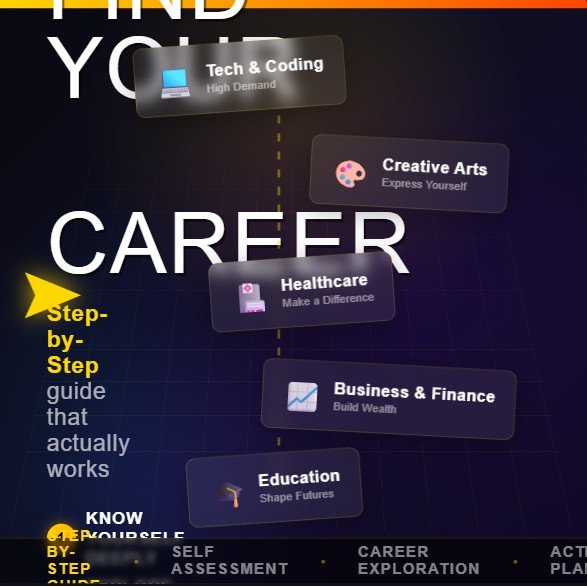
How to Choose the Right Career Path
A Step-by-Step Guide for Any Age
Whether you’re 18 or 48 — it’s never too early or too late to find your direction.
Choosing a career is one of the most significant decisions you will ever make. It shapes how you spend your days, who you meet, how much you earn, and how fulfilled you feel at the end of each week. Yet most people receive very little structured guidance on how to make this choice thoughtfully.
This guide is designed to change that. Whether you are a high school student trying to figure out what to study, a college graduate uncertain about your first job, a mid-career professional thinking about a pivot, or someone re-entering the workforce after a break — the framework in these pages is built for you.
We will walk through a clear, step-by-step process that combines self-reflection, research, practical experimentation, and smart decision-making. No guesswork. No pressure. Just a reliable path to greater clarity.
“The two most important days in your life are the day you are born and the day you find out why.” — Often attributed to Mark Twain
Why Career Choice Matters More Than Ever
The modern workforce has changed dramatically. Gone are the days when a single career defined your entire working life. Today, the average person changes careers (not just jobs, but entire fields) multiple times before retirement. The rise of remote work, automation, the gig economy, and rapidly evolving industries means that career agility is a genuine asset.
But more choice does not mean easier decisions. In fact, the abundance of options can lead to what psychologists call “choice overload” — a state of paralysis where too many possibilities make it harder, not easier, to decide. This is why having a systematic process matters enormously.
Career satisfaction is also directly linked to well-being. Research consistently shows that people who feel aligned with their work report higher life satisfaction, better mental health, stronger relationships, and greater financial security over time. Finding the right fit is not just about money or status — it is about building a life you actually enjoy waking up to.
Key insight: Career decisions are rarely permanent. The goal is not to find the “perfect forever career” but to make the best possible next move with the information you have today.
Step 1: Start With Deep Self-Reflection
Before you look outward at industries and job titles, you need to look inward. Self-awareness is the foundation of every good career decision. Without it, you are essentially picking a destination without knowing where you currently stand on the map.
Identify Your Interests
Ask yourself: What activities make time feel like it disappears? What topics do you find yourself reading about voluntarily? What did you love doing as a child before anyone told you what you “should” be doing?
Interests are powerful signals. When your work aligns with what genuinely fascinates you, you are more likely to sustain effort during difficult stretches, continue learning beyond what is required, and bring creativity to your work. These qualities compound over time into genuine expertise and career success.
- Make a list of 10 to 15 things you genuinely enjoy doing, whether or not they seem career-relevant
- Note the themes that emerge — do you gravitate toward helping people, solving technical puzzles, creating things, analyzing data, or organizing systems?
- Consider taking a structured interest inventory such as the Holland Code (RIASEC) assessment to identify your occupational personality type
Clarify Your Values
Values are the non-negotiables that define what makes work feel meaningful to you. They are different from interests because they operate at a deeper level — they are about what matters, not just what you enjoy.
Common career values include autonomy, creativity, security, helping others, recognition, competition, adventure, family balance, financial reward, intellectual challenge, and social impact. There is no right or wrong set of values. The important thing is to know yours.
When your career conflicts with your core values, no amount of money or prestige will make you feel satisfied for long. When it aligns, even ordinary workdays feel worthwhile.
Try this exercise: Write down your top five values and then rank them. Now ask: does your current or target career honor at least the top three? If not, that’s important information.
Assess Your Natural Strengths
Strengths are the things you do with ease and energy — the activities that feel almost effortless compared to the effort others visibly invest in them. They are different from skills (which are learned) and different from interests (which are about enjoyment). You can be strong at something you do not particularly enjoy, and you can enjoy something you are not particularly strong at. The sweet spot for career satisfaction tends to be where strengths and interests overlap.
Tools worth exploring include the Clifton Strengths assessment (formerly StrengthsFinder), the VIA Character Strengths survey, or simply asking five people who know you well what they consider your most natural abilities.
- Strengths to look for: problem-solving, communication, empathy, strategic thinking, attention to detail, creativity, leadership, technical aptitude, perseverance
- Pay attention to tasks that feel energizing even when they are hard — that energy is a clue
- Notice what people consistently come to you for help with — others often see our strengths before we do
Understand Your Personality
Personality does not determine what you can do, but it does affect what environments you will thrive in. An introvert can be an exceptional therapist; an extrovert can be a brilliant researcher. But understanding your personality helps you anticipate where you will feel most comfortable and most drained.
The Myers-Briggs Type Indicator (MBTI) and the Big Five personality model (OCEAN) are widely used frameworks. Neither is perfect, but both can surface useful patterns. For example, someone high in conscientiousness may thrive in roles with clear structure and measurable outcomes, while someone high in openness to experience may feel stifled in highly routine environments.
Step 2: Explore the World of Work
Once you have a clearer picture of who you are — your interests, values, strengths, and personality — it is time to cast a wide net and explore what is actually out there. Many people limit their career exploration to what they have personally witnessed: the jobs their parents had, the professions shown on TV, the industries in their hometown. The full landscape of career possibilities is vastly broader.
Research Industries and Sectors
Start at the level of industries rather than specific job titles. Industries include healthcare, technology, education, finance, manufacturing, media, nonprofit, government, legal services, hospitality, construction, agriculture, and hundreds of specialized fields. Each industry has its own culture, compensation norms, growth trajectories, and lifestyle implications.
As you explore, pay attention to which industries are growing and which are declining. The Bureau of Labor Statistics Occupational Outlook Handbook (for US-based readers) is an excellent free resource that provides employment projections, salary data, and job descriptions for hundreds of careers.
- Identify three to five industries that genuinely intrigue you based on your interests and values
- Research the growth trajectory of each industry over the next decade
- Look at what types of problems each industry is trying to solve and whether those problems motivate you
Dive Into Specific Roles
Within each industry, explore the variety of roles available. People often have a narrow view of what you can “do” in a field. Healthcare, for example, is not just doctors and nurses — it includes health informatics specialists, medical writers, hospital administrators, clinical researchers, public health advocates, patient experience designers, and many more. Technology is not just software engineers — it includes product managers, UX designers, data analysts, technical writers, cybersecurity specialists, and AI ethicists.
A helpful habit is to study job postings on platforms like LinkedIn, Indeed, or Glassdoor — not to apply, but to understand what skills are valued, what a typical day looks like, and what qualifications are expected. Reading job descriptions with an analytical eye teaches you a great deal about how industries actually operate.
Talk to Real People in Real Roles
No amount of internet research replaces actual conversation with people doing the work you are considering. Informational interviews — casual conversations with professionals in your areas of interest — are one of the most underused and highest-value career exploration tools available to anyone at any age.
The goal of an informational interview is not to ask for a job. It is to ask for insight. Most professionals are genuinely happy to spend 20 to 30 minutes talking about their career with someone who is curious and respectful of their time.
- Reach out through LinkedIn, alumni networks, or mutual connections with a brief, clear message
- Ask questions like: What does a typical day look like? What do you wish you had known before entering this field? What skills are most valuable? What are the biggest challenges?
- Aim for at least three to five informational interviews in each field you are seriously considering
Pro tip: After every informational interview, send a brief thank-you note within 24 hours. This is both courteous and strategically smart — the people you speak with today may become important advocates later.
Step 3: Test Your Assumptions Before Committing
One of the most common career mistakes is committing fully to a path based on research and imagination alone, without first testing the reality. The job you idealized from the outside can look very different once you are inside it. Conversely, fields you assumed were boring can surprise you with depth and engagement once you actually engage with them.
The antidote to this risk is deliberate experimentation before major commitment.
Internships and Work Experience
Internships remain the gold standard of career exploration for younger professionals. They offer real exposure to a role and industry, provide tangible experience to add to your resume, allow you to build a professional network early, and often serve as extended auditions for full-time positions. If you are a student, pursue internships aggressively — even unpaid experiences in your area of interest can be transformative.
If you are further along in your career and considering a pivot, look for project-based contract work, consulting engagements, or short-term roles that allow you to test a new field without fully abandoning your current one.
Volunteering and Side Projects
Volunteering can be an exceptional way to gain experience in a field you are curious about, especially in nonprofit, healthcare, education, or social impact sectors. Many organizations welcome skilled volunteers who can contribute in meaningful ways — and the experience you gain is just as real as paid experience from a learning standpoint.
Side projects are particularly valuable in creative and technical fields. If you want to know whether you enjoy graphic design, start designing things. If you want to know whether you enjoy coding, build something small. The project itself matters less than what you learn about how you respond to the work over time.
Shadowing Professionals
Job shadowing — spending a day or a few days alongside a professional in a field you are considering — is an underrated exploration tool. It gives you a ground-level view of the actual daily experience of a job rather than the idealized version described on career websites.
Many professionals are open to shadowing requests, especially when approached thoughtfully. Be specific about what you hope to observe, be respectful of their time, and come prepared with genuine questions.
Online Learning and Skill-Testing
Platforms like Coursera, edX, LinkedIn Learning, Udemy, and Khan Academy allow you to take introductory and intermediate courses in nearly any field for free or low cost. Taking a course is not just about gaining a skill — it is also about testing whether sustained engagement with the subject feels rewarding or draining. That emotional response is data.
Step 4: Evaluate Your Options Systematically
After exploration and experimentation, you should have a clearer sense of a few paths that genuinely interest and energize you. Now it is time to evaluate them rigorously so that your final decision is grounded in both passion and practicality.
The Career Fit Framework
Consider each career option through four lenses: Interest (Do I find this genuinely engaging?), Ability (Do I have — or can I develop — the skills required?), Values (Does this align with what matters most to me?), and Opportunity (Is there a realistic pathway to a sustainable career in this field?).
A career that scores well on all four dimensions is a strong candidate. A career that scores high on interest but low on opportunity is not necessarily off the table — but it deserves honest scrutiny. A career that scores well on ability but low on interest is likely to feel hollow over time, regardless of the salary.
Consider the Practical Realities
While passion is essential, it must be balanced with practical consideration. Career planning that ignores financial realities, educational requirements, or labor market conditions can lead to unnecessary struggle. This does not mean only chasing high-paying fields — it means going in with clear eyes about what to expect.
- Research the typical salary range for entry-level through senior roles in your chosen field — in your geographic area, since compensation varies enormously by location
- Understand the educational or certification requirements and honestly assess the cost, time, and effort needed to meet them
- Consider job availability in your region or your willingness to relocate
- Think about career ceiling and growth trajectory — does the field offer room to advance and increase your earnings over time?
Think About Lifestyle, Not Just Job Title
A career is not just a job title — it is a lifestyle. Different careers come with very different lifestyle implications: hours worked per week, flexibility of schedule, amount of travel, physical demands, social interaction level, work-from-home potential, and emotional intensity. Think carefully about the lifestyle you want and look for alignment, not just in what you do but in how you do it.
For example, a surgeon and a hospital administrator both work in healthcare, but their daily experience, schedule intensity, and lifestyle implications are dramatically different. Both can be deeply meaningful careers — but they suit very different people.
Remember: Salary matters, but research consistently shows that beyond a comfortable income threshold, additional money contributes surprisingly little to day-to-day happiness. Meaningful work, positive relationships at work, and reasonable autonomy tend to be stronger predictors of long-term career satisfaction.
Step 5: Build a Plan and Take Action
Clarity without action is just pleasant daydreaming. Once you have a career direction in mind — even a provisional one — the next step is to build a concrete plan to move toward it.
Set Clear, Time-Bound Goals
Break your career goal into manageable milestones with specific timelines. Vague intentions like “I want to become a data analyst someday” rarely translate into action. Specific goals do.
A structured goal might look like this: “By the end of this quarter, I will complete an introductory Python course. By mid-year, I will complete a data analysis project to add to my portfolio. Within 12 months, I will apply for entry-level data analyst positions at three companies per week until I receive an offer.”
- Use the SMART goal framework: Specific, Measurable, Achievable, Relevant, and Time-bound
- Break large goals into weekly and monthly action steps that feel manageable
- Review your progress regularly — monthly at minimum — and adjust your plan based on what you learn
Build Your Skills Intentionally
Every career has a set of core competencies — both technical skills and soft skills — that you need to develop. Identify the gap between your current skill set and the skills required in your target role, and build a deliberate plan to close that gap.
Not every skill requires formal education. Many can be built through online courses, self-directed projects, mentorship, on-the-job experience, reading, and practice. Be strategic about where you invest your time and money.
Grow Your Professional Network
Your network is one of your most valuable career assets — at any age and any stage. Studies suggest that a significant portion of job openings are filled through referrals and personal connections, often before they are even publicly posted. Building genuine, mutually beneficial professional relationships over time is one of the highest-ROI activities you can do for your career.
Networking does not require being an extrovert or attending awkward mixers. It can happen through LinkedIn, alumni associations, professional conferences, volunteer organizations, online communities, and simply staying in touch with people you have worked with or met during informational interviews.
- Aim to add value to your network before you need something from it
- Follow up consistently — relationships decay without maintenance
- Find a mentor or career advisor in your field of interest; mentorship can compress your learning curve significantly
Be Willing to Iterate
One of the most liberating truths about career development is that your first decision does not have to be your final one. Many highly successful people look back at careers that zigzagged in ways that seemed messy in the moment but created a unique and powerful combination of experiences in retrospect.
Treat your career as an ongoing experiment rather than a fixed destination. Gather feedback, stay curious, keep learning, and be willing to update your direction when new information suggests a better path.
Career Guidance by Life Stage
While the core framework above applies to everyone, the specific challenges and opportunities vary significantly depending on where you are in life. Here is tailored guidance for each major life stage.
Teenagers and High School Students (Ages 14–18)
This is the stage of maximum exploration with minimum commitment required. Take full advantage of that. Try many different activities, clubs, part-time jobs, and subjects — not to find “the answer” but to gather data about yourself.
- Do not feel pressure to know your career at this stage — most adults changed direction multiple times
- Focus on developing strong foundational skills: writing, communication, critical thinking, and basic numeracy
- Look for part-time jobs, internships, or shadowing opportunities even in unrelated fields — all work teaches you something
- Talk to adults in your life about their careers, not just the prestigious ones — everyone has something to teach
- When choosing a college major or vocational path, prioritize genuine curiosity over perceived prestige or parental expectation
College Students and Recent Graduates (Ages 18–26)
College is both a time of intellectual exploration and a period of practical preparation for the workforce. The mistake many students make is treating these as separate projects. The most successful graduates integrate them — they study what genuinely interests them while actively building career-relevant experience and networks.
- Pursue at least two internships before graduation in fields that genuinely interest you
- Do not wait for the “perfect” first job — most first jobs are stepping stones, not destinations
- Use your university’s career center, alumni network, and faculty connections — these resources are often underused
- Your GPA matters less than you think after your first job; your experience, skills, and network matter more
- It is completely normal to feel lost after graduation — give yourself permission to experiment rather than demanding immediate certainty
Early Career Professionals (Ages 26–35)
Your twenties and early thirties are a powerful time to experiment, pivot, and invest in skill-building. The cost of changing direction is relatively low at this stage because you have fewer fixed commitments and a longer career runway ahead of you.
- If your current job is not right, it is far better to make a change now than to wait another decade
- Focus on developing T-shaped skills: depth in one area combined with broad exposure across related areas
- Seek out stretch assignments, cross-functional projects, and new responsibilities — visible growth is how you advance
- Begin building your personal brand professionally: a strong LinkedIn profile, a portfolio of work, and a reputation for reliability are invaluable assets
- Consider working with a career coach if you feel stuck — an outside perspective can break through mental blocks
Mid-Career Professionals (Ages 35–50)
Mid-career pivots are more complex because the stakes are higher — you may have mortgages, family responsibilities, and a lifestyle built around a particular income level. But they are absolutely possible and often lead to the most fulfilling chapters of a person’s working life.
The key is to plan your transition carefully and move strategically rather than impulsively. Many mid-career changers find that their existing experience is a genuine asset in a new field, not a liability — especially if they can identify how their past skills translate.
- Identify which of your existing skills are transferable to your target field — there are almost always more than you expect
- Build experience in your new field while still employed in your current one, if possible — this reduces financial risk
- Expand your network deliberately into your target industry before you formally make the move
- Consider additional education or certification strategically — pursue it only if it genuinely accelerates your transition
Career Changers After 50
The idea that it is “too late” to change careers after 50 is one of the most persistent and unhelpful myths in professional culture. People are working into their seventies. A career change at 52 still leaves you 15 or more years of working life ahead. That is more than enough time to build something meaningful.
What older professionals bring to new careers is often underestimated: decades of emotional intelligence, professional judgment, relationship-building skills, and resilience. These are not trivial advantages. They are genuinely rare and valuable.
- Focus on roles that value experience and maturity, where your perspective is an asset
- Be realistic about which aspects of your previous career you want to preserve and which you are genuinely happy to leave behind
- Consider encore careers: roles in consulting, teaching, mentoring, or advisory work that leverage your expertise in new ways
- Address potential age bias head-on by keeping your skills current, maintaining a modern professional presence, and emphasizing results over tenure
Common Career Mistakes to Avoid
Understanding what goes wrong can be just as valuable as knowing what to do right. Here are the most frequent and costly career mistakes people make at every age.
Choosing Based on Prestige or Parental Expectation
Selecting a career primarily because it sounds impressive or because a parent expects it is one of the most reliable paths to professional dissatisfaction. External validation fades quickly when you are doing work you find meaningless day after day. Your career has to live with you — not with whoever you are trying to impress.
Waiting for Perfect Certainty Before Acting
Many people delay career decisions indefinitely because they are waiting to feel 100% certain before committing to a direction. That certainty rarely arrives without action. You will learn more about a career from three months of actual experience than from three years of contemplation. Move before you are ready, and let experience teach you.
Ignoring the Job Market Realities
Passion without pragmatism can lead to genuine suffering. If you pursue a career in a field with very limited job opportunities, very low compensation relative to your financial needs, or very high barriers to entry without a realistic plan to overcome them, you may find yourself frustrated and financially stressed in ways that undermine everything else.
This does not mean abandoning passion — it means combining passion with open eyes about the reality of the market. Often there are adjacent roles that honor your interests while offering better practical outcomes.
Defining Yourself Too Narrowly Too Early
Committing so deeply to a single identity early in your career that you close yourself off to adjacent opportunities is a limiting mistake. The most resilient careers are built on a foundation of broad skills and diverse experiences, not rigid specialization from the start.
Neglecting Relationships and Network
Career progress almost never happens in isolation. The people who advance most effectively are usually not the most technically brilliant — they are the ones who have invested in genuine relationships with colleagues, mentors, sponsors, and peers. Neglecting your network until you need it urgently is a common and costly mistake.
Helpful Tools and Resources
The following tools and resources can support your career exploration and planning process. They are widely available and many are free.
Self-Assessment Tools
- Holland Code (RIASEC) Interest Assessment — identifies your occupational personality type across six dimensions
- CliftonStrengths (formerly StrengthsFinder) — identifies your top natural talent themes
- VIA Character Strengths Survey — free tool that identifies your core character strengths
- Myers-Briggs Type Indicator (MBTI) — widely used personality framework
- Big Five (OCEAN) Personality Assessment — research-backed personality model available free online
Career Research Resources
- Bureau of Labor Statistics Occupational Outlook Handbook (bls.gov/ooh) — comprehensive US career and salary data
- O*NET OnLine (onetonline.org) — detailed database of occupations, skills, and work activities
- LinkedIn — essential for research, networking, and informational interviews
- Glassdoor — employee reviews, salary data, and culture insights for thousands of companies
- Informational interviews with real professionals — free and invaluable
Learning Platforms
- Coursera, edX — university-level courses from top institutions, many free to audit
- LinkedIn Learning — professional skill courses across business, tech, and creative fields
- Udemy — affordable courses on practical skills in virtually every field
- Khan Academy — free foundational learning across many subjects
- YouTube — underrated source of free, high-quality educational and industry content
Professional Support
- Career counselors through university career centers — free for enrolled students and often available to alumni
- Certified Career Development Professionals (CCDPs) — for professional coaching and guidance
- Mentors — seek out professionals in your target field who are willing to offer guidance
- Professional associations in your field of interest — often offer networking, events, and resources for members
Final Thoughts: Your Career Is a Journey, Not a Destination
If you have read this far, you are already doing something most people do not — you are being intentional about one of the most important decisions you will make. That intentionality alone puts you ahead.
Choosing the right career path is not a single decision made once and never revisited. It is an ongoing process of self-discovery, exploration, learning, and course correction. The world changes, you change, and your career naturally evolves along with both.
What matters most is not getting it perfectly right on the first try — it is building the self-awareness, curiosity, and courage to keep growing in the right direction over time. The people who have the most satisfying careers are not the ones who never made wrong turns. They are the ones who learned from each turn and kept moving forward.
You have everything you need to begin. Start with the step that feels most accessible right now — whether that is a self-assessment, an informational interview, or simply writing down what matters most to you — and let momentum build from there.
Your next chapter is waiting. Go write it.
“The secret of getting ahead is getting started.” — Mark Twain
— End of Guide —
Related News

Before You Make Another Career Move, Ask Yourself These 10 Questions

The Difference Between Having a Job and Building a Career Is Bigger Than You Think

You Don’t Need Another Certificate—You May Need to Use Your Skills Differently

If Your Workday Feels Like Groundhog Day, These 8 Career Changes Could Help

The Jobs You’re Qualified for Might Not Be the Jobs You’re Searching For